Every tradition starts somewhere.
Serve meatloaf instead of turkey one December and it is a change of plan. Serve it again the next year and someone will start calling it what we always do. Repetition is what turns a choice into a tradition.
That happens at a much larger scale too, and more recently than we tend to assume.
In northern China, mothers and grandmothers once sewed elaborate tiger-shaped caps (虎头帽, hǔtóumào) for young children. The custom was local and domestic, rooted in folk beliefs that the tiger could protect a child from illness and harm. Over the twentieth century, that tradition declined dramatically. Yet the tiger cap has since returned in a very different role. It now circulates as a heritage artefact, souvenir, contemporary children’s product and much more widely as a symbol of Chinese folk culture.
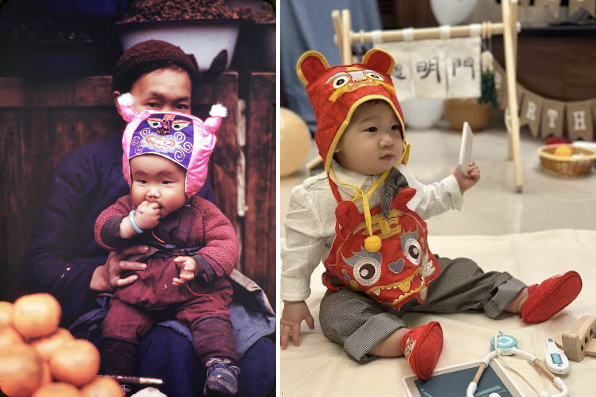
Something highly specific took on a much broader role.
That kind of shift can smooth over history. It can also give a fading craft new makers, new buyers and a new economic life.
That matters for brands thinking about provenance.
Earlier pieces in this series looked at how “Made In” has become a thinner guarantee, how consumers read origin across accumulated layers, and how origin can be felt in the material evidence held in an object. This one looks at something different: what happens when origin becomes a ritual that people take part in.
Traditions do not have to be old
Brands are already good at telling origin stories. Every brewery foregrounds its founding date. A fashion house elevates a particular craft technique. A food brand selects the family recipe, landscape or founder story that best explains who it is today.
“Invented traditions” work slightly differently.
The historian Eric Hobsbawm used the term for repeated practices that create a sense of continuity with the past, and which often appear precisely when that continuity has been interrupted [1]. Two things tend to be true. Something small or local is reworked so that it stands for something larger. And it gets fixed into a repeatable form: a date, an object, a gesture.
That second part is what matters commercially. While a story can be admired, a tradition can be joined.
Give people something to do
KFC in Japan is the clearest example [2]. The brand ran its first big Kentucky for Christmas push in 1974, in a country with no established Christmas meal of its own. Fried chicken gradually became part of the season, helped along by advertising, pre-ordering and the Party Barrel. Families now order weeks ahead and queue on 24 December.
KFC did not uncover an old Japanese Christmas tradition. It offered one.
It also arrived at the right moment, as Christmas was being taken up in Japan as a secular celebration. The brand supplied a product, a date and something a family could repeat. Consumers did the rest.
That is the pattern: an occasion, an object, repetition. Candy corn holds together the same way, a sweet tied to a season until it became something people inherit without wondering where it began.
Brands can propose traditions. They cannot declare them. The ritual has to make sense in the culture it enters.
When something local stands for something bigger
Food and drink show this especially well.
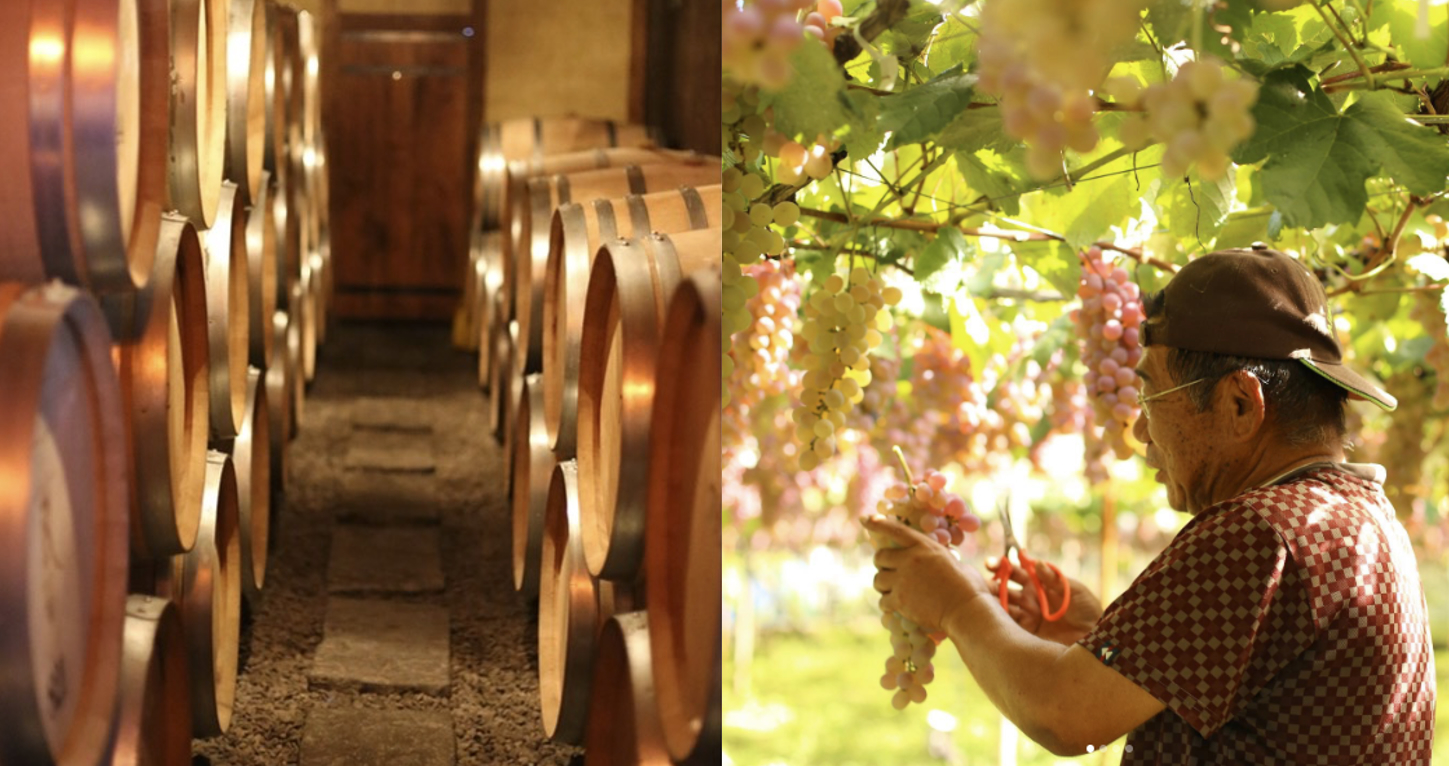
Take Koshu wine. The grape has a long history in Japan’s Kōfu Basin, but what was made from it for most of the twentieth century was budōshu (葡萄酒 / ぶどうしゅ): cheap wine pressed from misshapen table grapes and sold in 1.8-litre bottles. One farmer remembered it as sour, oxidised and good for nothing but getting hammered. By the late 1990s the grape was close to obscurity.
What changed was mostly the story. A small project produced lower-alcohol test batches in 2004, a strong 88/100 score from Robert Parker, whose 100-point ratings carried huge weight in the wine trade, gave the region its first real hook, and in 2009 government funding created Koshu of Japan, which took the wines to London under the motto “Japanese wine matches Japanese food” [3].
Local people had not historically drunk Koshu alongside Japanese cuisine. But the claim created demand the industry then had to meet, and parts of it did: new fermentation methods, fresher flavour profiles, wine tourism, export routes. The gains were uneven, since smaller wineries could not afford to upgrade. Even so, the reframing changed what got made.
The modern revival of American artisan cheesemaking shows the same dynamic from another direction. From the late 1970s and early 1980s, makers such as Laura Chenel began producing handmade cheeses commercially, often borrowing openly from European techniques and long-established peasant traditions like the ones in France or Italy. Rather than grounding its identity in centuries of regional continuity, the emerging sector came to celebrate experimentation and entrepreneurialism as its heritage – a “tradition of invention” [4]. What makes it feel essentially ‘American’ is the commitment to doing something new.
Innovation becomes the heritage.
How Mulino Bianco helped invent an Italian breakfast
Perhaps the clearest brand example comes from something far more everyday: breakfast.
When Mulino Bianco developed its frollini biscuits in the 1970s, the product itself was innovative. Richer and crumblier than many existing biscuits, the frollini were designed with irregular forms and rustic ingredients that made them feel closer to homemade baking.
The brand wrapped that innovation in nostalgia: mills, countryside, wheat, butter, family life.
But there was another opportunity. Italians ate breakfast, yet research for Mulino Bianco found no dominant cultural model of what an “Italian breakfast” actually was. An internal study described the opportunity rather neatly: “a new tradition to be invented” [5].
From 1992 to 1996, Mulino Bianco helped formalise one.
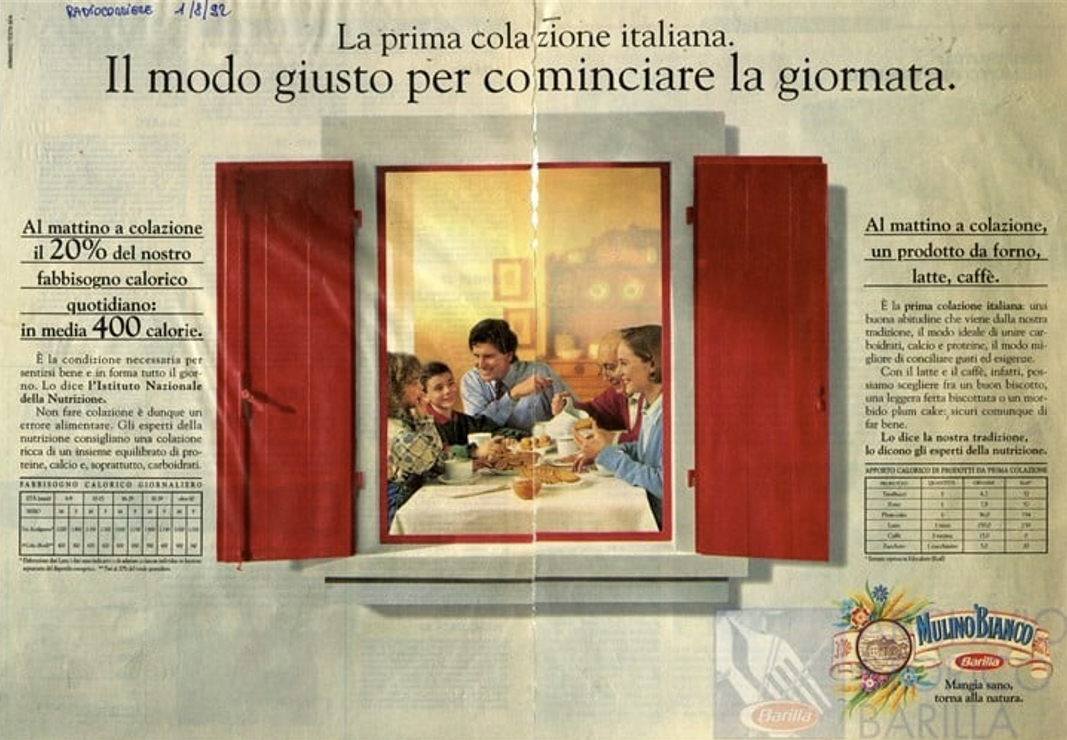
Coffee, milk and sweet bakery products were presented as the Italian breakfast: familiar, domestic and rooted in national food culture. Advertising and public communication reinforced the model until the combination became increasingly recognised as a tradition in its own right.
The cleverness lies in the relationship between story and product.
Mulino Bianco did not only claim that its biscuits represented Italian heritage. The biscuit gave people a way to enact that heritage every morning. Its taste, texture and repeated place at the breakfast table made the story tangible.
The product innovation helped build the tradition; the tradition, in turn, gave the product cultural meaning.
Origin was not claimed. It was served.
Make origin something people can take part in
There is a tension worth naming. Reworking a tradition can flatten the culture that made it distinctive, especially when something very local gets polished into a national cliché. The answer is to stay specific: about what is carried forward, what is genuinely new, and where the source material came from. Done carefully, this works against flattening rather than with it.
So the question shifts. Instead of asking only what our origin story is, ask what people could do with it.
For brands, that might mean taking something local and giving it a wider role, reactivating a detail from your history or archives, or linking a new product or behaviour to an existing ritual or cultural moment in a way people want to repeat.
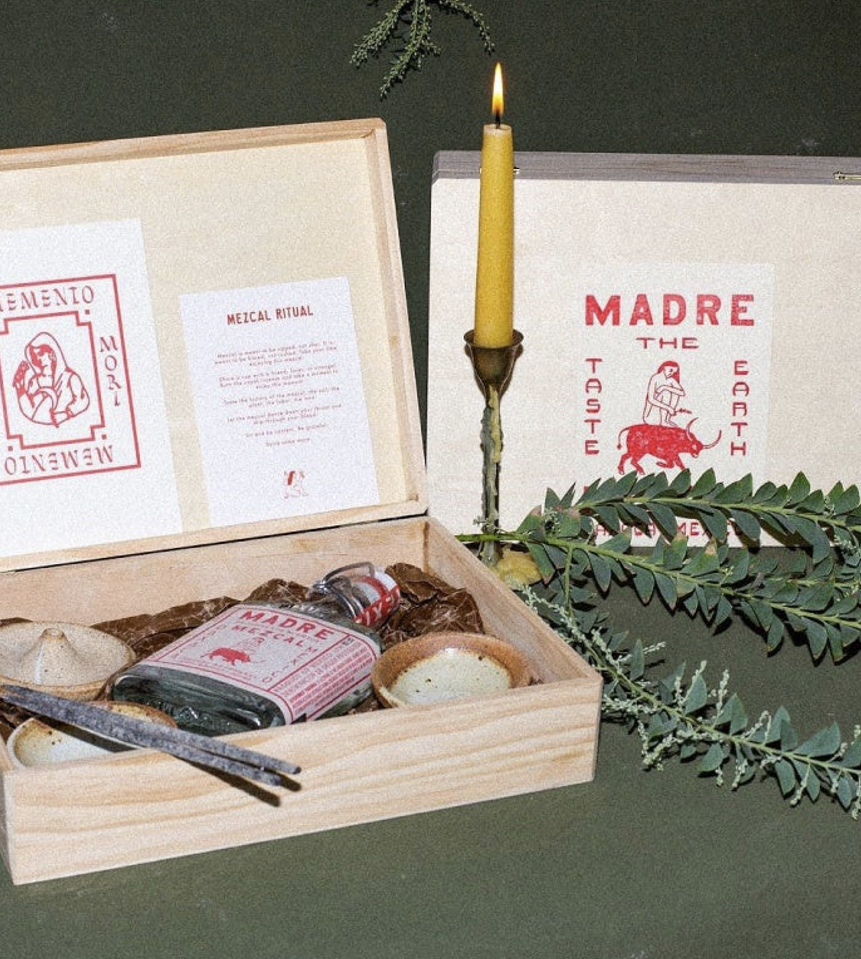
Madre Mezcal offers one modest answer: a ritual kit of ceramic copitas, copal incense and a guide, under the invitation to sip slowly and live fully. Rather than leaving Oaxaca in the copy on the bottle [6], it builds a moment around the drinking through objects, scent, pace and gesture.
It can be as small as a serving gesture or as large as a season. A material might become a gifting ritual; a regional ingredient might shape a new drinking occasion.
Origin does not have to sit in the factory address. Origin does not have to sit in the factory address. Find something people can do, give them a reason to repeat it, and origin stops being a claim to be checked.
It becomes something people take part in. And if they do it again next year, a new tradition has already begun.
References
- Hobsbawm, E. & Ranger, T. (1983), The Invention of Tradition. Cambridge University Press.
- KFC (2020), ‘How “Kentucky for Christmas” began in Japan’. https://global.kfc.com/stories/how-kentucky-for-christmas-began-in-japan
- Kingsbury, A. (2014), ‘Constructed heritage and co-produced meaning: the re-branding of wines from the Koshu grape’, Contemporary Japan, 26(1), pp. 29–48.
- Paxson, H. (2014), ‘Re-Inventing a Tradition of Invention: Entrepreneurialism as Heritage in American Artisan Cheesemaking’, in R. L. Brulotte & M. A. Di Giovine (eds.), Edible Identities: Food as Cultural Heritage. Routledge, pp. 29–38. https://doi.org/10.4324/9781315578781-2
- Pirani, D. (2024), ‘Invented market traditions: The marketing of Italian breakfast (1973–1996)’, Business History, 66(4), pp. 905–926.
- Madre Mezcal, ‘Ritual Kit’, Bottle Shop. https://madremezcal.com/pages/bottle-shop#ritual-kit