
“Made in.” Two small words that once carried weight. For most of the 20th century, they signalled something solid: craft, industrial pride, national competence.
In a world of trade wars and reshoring rhetoric, you might expect those words to matter more than ever. Yet while the label still exists, the certainty has thinned.
Hybrid supply chains, outsourced fabrication and globally distributed assembly lines have complicated the idea that a product cleanly belongs to one place. Geography hasn’t disappeared, it’s fragmented.
"You never really know where something’s from today. Unless you dig deep. I probably don't even know where half the things I have are really made from." (USA, Male, 27)
Yet at the same time, the appetite for origin signals remains strong. Consumers are actively seeking out Mexican spirits, Chinese tea, Italian leatherware or Korean streetwear. The tension here is important. It hints that “Made In” is about something more than just geography. That tension is precisely why we conducted this research: to understand whether “Made In” still carries meaning, or whether consumers have quietly moved beyond it.
“For me it’s about knowing the history, where it came from, if it started as a family business, how it’s been passed down. It feels rooted. It’s different from just slapping ‘Made in X’ on the bottle.” (USA, Female, 50)
At 8TH DAY, we set out to understand what “Made In” means in 2025. Not at the level of trade policy or macroeconomics, but at the level of lived decision making.
We ran depth interviews across the USA, France, China and Japan to explore a simple question: if globalisation has blurred production, why does provenance still matter?
What we found was consistent beneath the surface confusion: consumers understand and explore provenance at multiple levels: practical, emotional, and symbolic - and the traditional ‘country of origin stamp’ only satisfies the shallowest of these.
Beyond Geography: Three layers of provenance
Across markets, people described origin operating at three levels: practical, emotional and symbolic.
Practical: provenance as risk filter, especially in categories that are eaten, drunk or absorbed by the skin. Origin becomes a stamp for safety and standards.
“Dairy products should come from Europe or Australia right? And health supplements from United States? I’d just trust them more” (China, Female, 26) Here, provenance is a mental shortcut to perceived quality control.
Emotional: provenance as transport: offering a sensorial or emotional voyage to another country’s cultural universe to experiment, trial, discover and experience connection.
“Going to a Chinese supermarket for instance. And that allows me to have that sense of discovery through dishes I make and share with my family” (France, Female, 51) It’s about narrative, texture, atmosphere. Origin becomes experiential.
Symbolic: provenance as identity. Here origin can even symbolise a form of activism, from impassioned socio-economic motivations like supporting small businesses and rejecting unethical working conditions, to inner-driven image curation like delving deep into an artisan’s craft story and displaying ‘in-the-know’ cultural cache.
“I try to buy from smaller businesses… they have a smaller footprint and put a higher emphasis on sustainability.” (USA, Male, 27)
Origin choices double as identity choices, a way to reassert intention and selective curation in a disembodied, on-demand world.
From patriotism to grounding
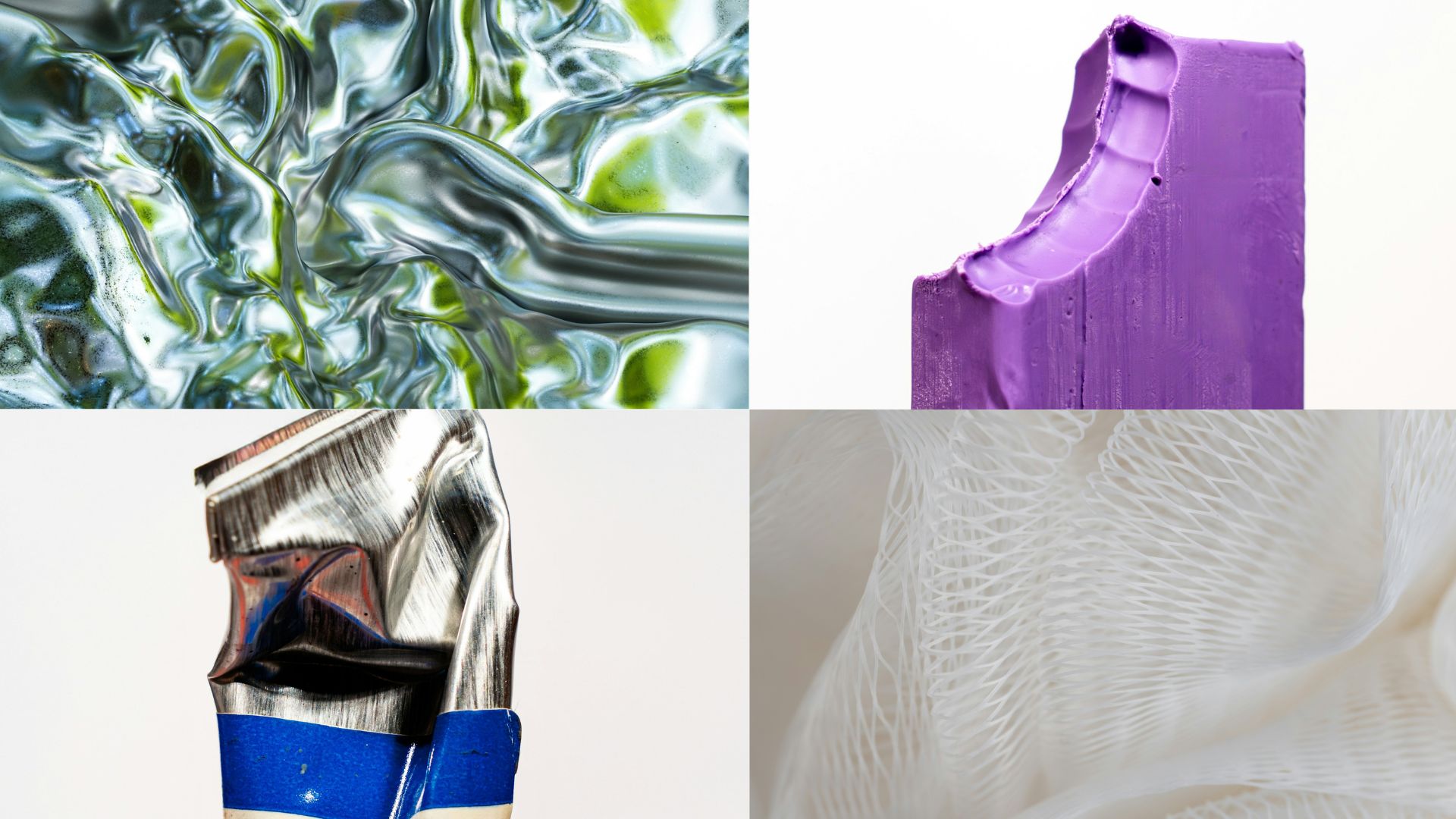
One of the clearest patterns across markets is that provenance is shifting away from overt patriotism and towards something more personal: grounding. It offers a sensory re-entry point into humanity. It lets people feel connected to something textured, situated and filled with human intention. Provenance functions like an oil painting in a world of AI slop. Textured, imperfect, human.
“With batch production, I feel like there is a sense of a human being behind it” (France, Male, 26)
Consumers trust provenance when it is embodied: when they can sense it, not simply read it. That might mean a trace of a maker’s hand, a distinctive craft logic, or the creative fingerprint of a designer’s mind. From Zaratsu polishing to a woven band adorning a spirit bottle, provenance becomes a form of emotional transference: a recognition that human effort happened somewhere.
Crucially, this doesn’t require a literal place. It can be a philosophy, a mood, an aesthetic language, a worldview. A product can feel “from” a place not because of coordinates but because of concept - because its design, behaviour or materials carry a particular cultural or creative intentionality.
“There is something very classic about French design, maybe it comes from our love of the beautiful, our attachment to beauty, which shines through.” (France, Female, 51)
“XPeng began as a car manufacturer but is now steadily developing intelligent robots. This represents excellent innovation. It highlights how Chinese brands, despite lacking the long histories of foreign counterparts, possess a spirit of innovation baked into our DNA”. (China, Male, 40)
It’s a concept that is shaped not only by where something is made but by where it’s received. The meaning of a human touch varies dramatically across cultures: what signals it in Japan differs from what signals it in France, China or the United States. Provenance is therefore a relational idea, not a fixed one.
This matters for brands across every category: food & beverage, luxury, beauty, technology, mobility, even finance.
Origin can no longer be treated as a compliance detail or a flag-waving exercise. It’s a palette of cues that allow people to reconnect with human texture in an increasingly flattened world. A desire to anchor consumption in something inherited and human.
“I needed to replace a kitchen appliance lately, I could have got something cheaper, more standard - but I remembered my grandparents having Moulinex products. I went to a local shop and felt like I was connecting to them and supporting French companies” (France, Female, 51)
In the coming months, we’ll share new thinking on how people navigate provenance, how these patterns differ across regions, and how brands can communicate origin in ways that feel meaningful, grounded, and unmistakably human – crucial in the brave new world we find ourselves in.