
This article is part two of a series exploring our new research on consumers’ complex and evolving perceptions of product origins: where and how products were made, by whom, and what that says about the goods in their hands. Click here to read part one.
The “Made In” label, originally meant to dissuade, was met with ambiguity from the start.
It began in 1887 in Great Britain with the Merchandise Marks Act. The legislation required imported goods to carry labels indicating their country of origin. British lawmakers hoped it would spur consumers to avoid German goods in favour of domestic manufacturing.
The opposite happened: “Made in Germany” became associated with engineering excellence and industrial reliability. Initially meant as a warning, the label instead became an endorsement.
For much of the twentieth century, labels continued to carry positive associations: Swiss precision, Italian craft, Japanese fastidiousness. But as discussed in our article on the “Made In” label, today’s products are rarely made in a single place.
Consumers still derive ideas such as quality, trust, and safety from “Made In” labels. But that label is now just one layer of meaning among many that convey to consumers where a product came from, how it was made, and by whom.
To explore how people interpret origin today, 8TH DAY conducted qualitative research across multiple markets: combining cultural analysis with in-depth interviews about everyday consumption.
For brands to successfully navigate the country-of-origin effect within international markets, they must understand these layers as components of a story: an origin story. Rather than leaning on a simple label, they must convey origin to the consumer by thoughtfully utilising these material and historical qualities.
This article outlines the different associations consumers across cultures bring to products from different countries, how those meanings have evolved and accumulated over time, and how successful brands are conveying origin in a way that resonates with consumers.
How the meaning of provenance accumulates for consumers
Consumers’ ideas of origin can be thought of like geological strata. Each historical moment has deposited another layer of meaning onto the idea of product origin. None of these layers disappear; they remain beneath the surface, sometimes exposed by consumer reactions to products, and sometimes deliberately excavated by brands.
i. Trade and regional specialisation
In early global trade networks, certain regions became synonymous with particular forms of production. Champagne from Champagne. Murano glass from Venice. Sheffield steel. In this era, origin simply indicated where a product was produced and what that place specialised in making. Origin signalled culture, sometimes defensively, through legal means.
ii. Industrial reputation
Industrialisation transformed these associations into national reputations. This phenomenon is described as the country-of-origin effect, where consumers use national reputation as a heuristic when evaluating products. Origin signalled characteristics.
iii. Ethical and political layer
By the late twentieth century, origin began to carry ethical meaning as well. Fair Trade certification, labour standards, environmental sourcing and consumer boycotts all linked purchasing decisions to the conditions under which products were made. As one interview participant described: “I’m buying coffee from a certain place because it supports something… or I’m not buying beans from somewhere for the opposite reason.” Origin was no longer simply about quality. It had become a signal of values.
iv. Narrative origin
The uppermost layer: global supply chains have made production geographically complex and often opaque. In response, brands increasingly construct narratives around origin rather than relying solely on a geographic statement. Origin becomes a story: about landscape, expertise, materials or culture. One participant in our study described why this matters: “People feel quite untethered, and stories of origin become the most literal tether.”
The brands telling effective origin stories
Brands now communicate origin through a broader vocabulary than the traditional “Made In” label, utilising different layers of meaning that resonate with specific audiences.
The luxury space is one category where the classic “Made In” label still holds power. Take Rolex, whose Swiss origin reinforces perceptions of precision engineering, or Ferrari, whose Italian identity remains inseparable from the mythology of performance and design. In these cases, geography itself still functions as a powerful shorthand to imply capability.
Some brands take this further, using geography not as a single claim but almost as a segmentation instrument. New Balance deliberately maintains manufacturing in both the United States and England. The Made in USA range speaks to American craft heritage and the premium associated with domestic manufacturing.

The England line, produced at the brand’s Flimby factory in Cumbria, taps into a different cultural stream entirely: football terrace history, Northern English industrial tradition, and the specific resonance that “Made in England” carries in European streetwear and sporting culture.
In this way, the brand drills into different layers of geographic meaning for two different audiences: both with a pride in domestic manufacturing, but with distinct local histories and cultural vocabularies that are reflected back at them in the product and messaging.
When national origin takes a backseat
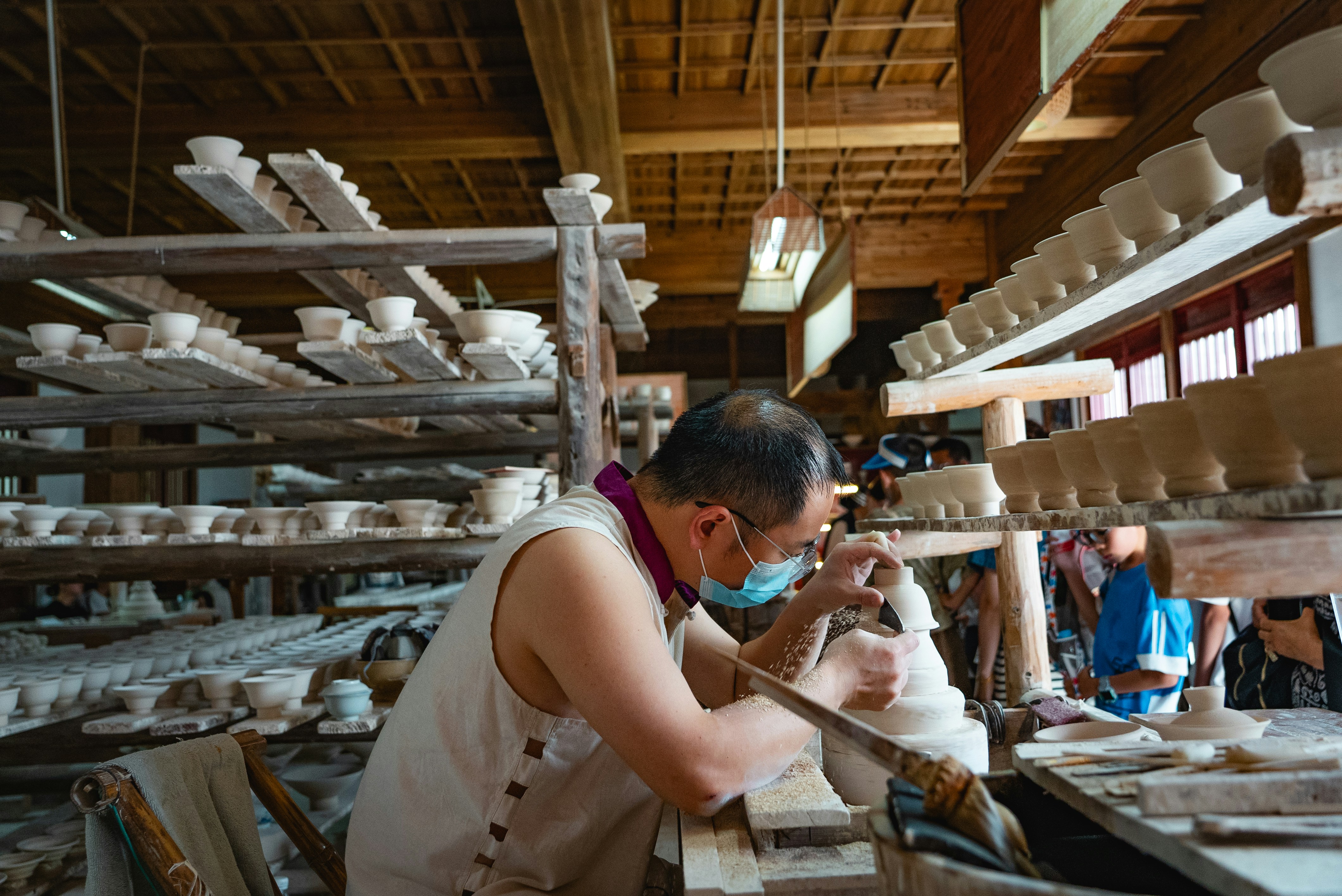
In other cases, authenticity derives less from place than from expertise: less “made in”, more “made by”. Luxury houses such as Hermès highlight the individual artisans who produce their products; as New Balance does with manufacturing prowess, Hermès foregrounds the human skill in the object itself. This way, a brand like Hermès can avoid being singularly tethered exclusively to a physical place.
Then there are examples in which the human touch is entirely deemphasised. Talisker whisky describes itself as being “Made by the Sea,” suggesting that the maritime climate of the Isle of Skye plays an active role in shaping the whisky itself. In these cases, elements become part of the brand’s authorship.
Origin can also be expressed through the provenance of materials. Luxury house Loro Piana builds its narrative around rare fibres such as vicuña and cashmere. Outdoor brand Patagonia has built its entire identity around the provenance of materials: recycled polyester, organic cotton, traceable down, making sustainability and supply-chain transparency the product. These brands do considerably less to assert country of inception. In these cases, the story of origin begins with what the product is made from, and more with what they’re made of.
Provenance provides consumers with a human connection
Running beneath all of the above is a signal that consumers reach for when the label fails them. It is neither geographic nor categorical, but sensory: the felt evidence that a human being, somewhere specific, made a choice.
Research participants across multiple markets described this in almost identical terms. “I can see… the intention put in it. I think it also for me speaks to the passion behind the brand.” Another put it more physically: “High quality, durability, tough. You know, someone put their blood and sweat actually into it and just held it a higher standard.”
A French participant named precisely what mass production had erased: “You know that there’s a human being behind it, and that’s precisely what has happened with the big productions: the scenography has become automated. And there’s that thing of knowing that each T-shirt or bag is a bit unique. There might be little mistakes too.”
What these responses share is an orientation away from the label and towards the object itself: towards the traces left in it by whoever made it. This is not Made In, or Made By, or Made Of, or Made For. It is something prior to all of those: a reading of the object for signs of human presence.
For brands, this shift has important implications. Origin should not be treated purely as a compliance requirement or supply-chain disclosure. Those remain essential, but they are only the starting point. The more powerful role of origin lies in its ability to layer together geography, craft, materials, culture, values and audience into a coherent story. The strongest brands do not rely on a single layer of origin, but tap through the layers, extracting different parts of product or brand history to tell a story that says more than a label ever could. Made in Germany, was, after all, Made in England.
References
- Nuremberg Institute for Market Decisions (2025)
- Made In Labels: How Consumers Perceive “Made in” Markings | Beverland, M. & Luxton, S. (2020)
- How Brands Craft National Identity | Cai, Y. & Swagler, R. Country-of-Origin Effects in Consumer Decision Making Verlegh, P. & Steenkamp, J. Consumer Responses to Country-of-Origin Information
- Country-of-Origin Effects in Consumer Decision Making | Verlegh, P. & Steenkamp, J.
- Consumer Responses to Country-of-Origin Information