
There is something strange happening at the cinema at the moment.
Harry Potter and the Philosopher’s Stone is back on the big screen for its 25th anniversary. Raiders of the Lost Ark turns 45 this year and is returning too. Next year, the original Star Wars will return to celebrate its 50th. And I’m calling it now, we’ll see Peter Jackson’s Lord of the Rings trilogy back in the cinemas to celebrate turning quarter of a century before the year is out.
It feels as though the imaginative worlds I grew up with are suddenly appearing all around me again.
I’m not quite old enough to have seen Star Wars in the cinema in 1977. I inherited that particular obsession through well-worn VHS tapes in the 90s, along with Indiana Jones. But Harry Potter arrived at exactly the right moment. And when The Lord of the Rings appeared on screen, I was an early teenager and completely consumed by it.
They were very different stories. But for me, they had something in common.
I didn’t just watch them. I inhabited them.
They became the raw material for things I drew, built, played and imagined. I knew the characters and the worlds. I returned to them again and again. Long after the film ended or the book was closed, they continued somewhere else.
In my imagination.
Seeing these films appearing in cinemas again has made me wonder whether my children will experience stories in quite the same way.
Not because there aren’t extraordinary stories for them to discover. Quite the opposite.
They have almost unlimited access to them.
Streaming services contain thousands of films and programmes. YouTube never ends. Games contain entire explorable worlds. Music, books, creators and characters are available instantly. And recommendation algorithms are extremely good at finding the next thing they might like.
For a child growing up today, there has probably never been more fuel for the imagination.
So why do I sometimes wonder whether there might be less space for it?
The difference is not simply the amount of content. It is what happens when the content finishes.
When I watched Star Wars, there wasn’t necessarily another Star Wars waiting.
So, you watched it again. And again.
Eventually, you exhausted what George Lucas had made for you. And that’s when something interesting happened.
You started making the rest yourself.
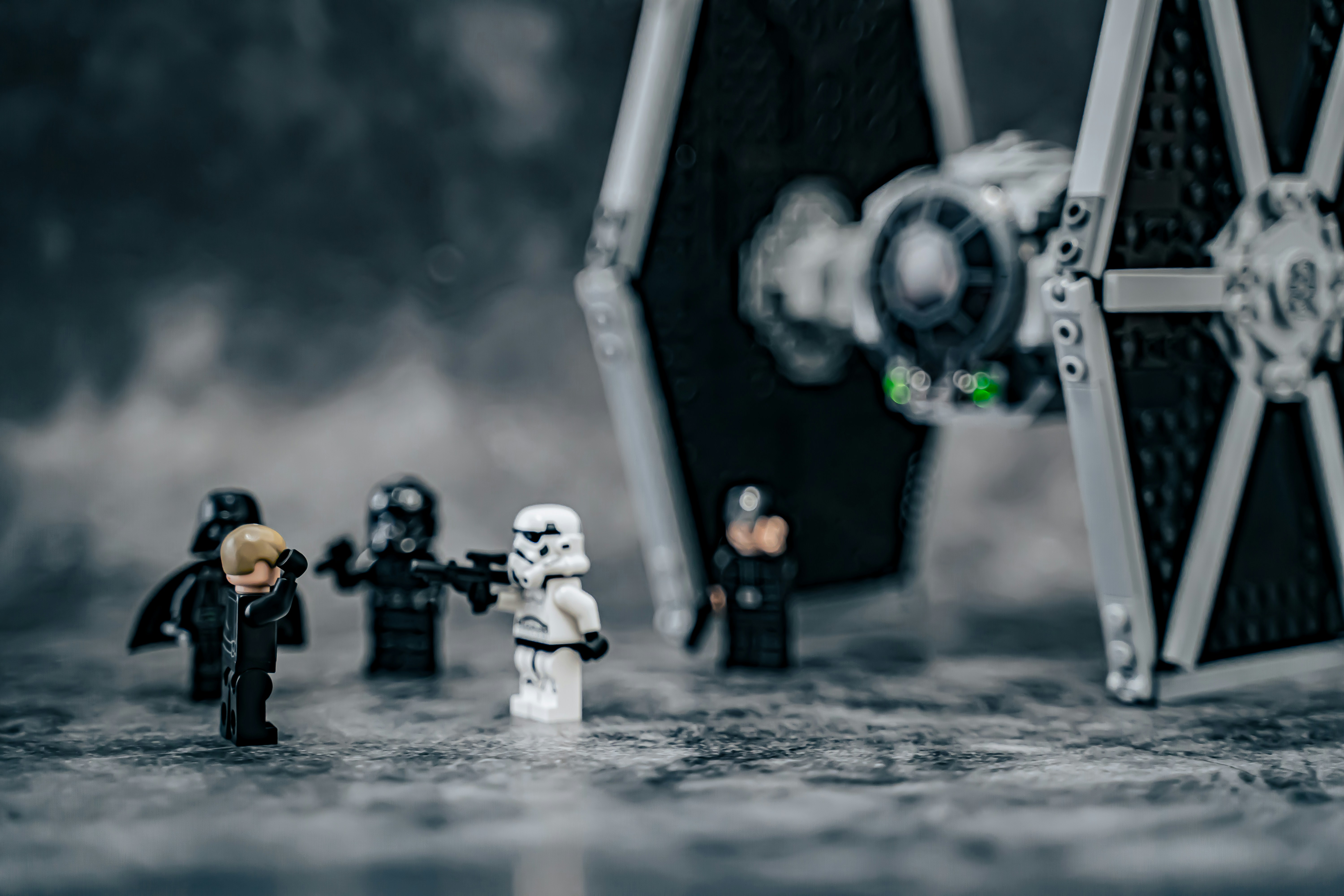
The sofa became the Millennium Falcon. A stick became a lightsaber. Lego became whatever vehicle you couldn’t actually own. You invented characters, continued stories and constructed worlds that didn’t exist.
The constraint wasn’t incidental to my imagination.
It may have helped create it.
We tend to think imagination thrives on abundance. Give people more inspiration, more stimulus, more possibilities and surely they will become more imaginative.
But perhaps imagination also needs absence.
Boredom. Repetition. Constraint. The moment when there is nothing more to consume and the mind has to take over.
This is what makes today’s abundance interesting.
The issue isn’t that children have too much choice, or that things were somehow better when we had four television channels and a VHS tape we’d already watched twelve times. Today’s children can discover interests, communities and worlds that would have been completely inaccessible to previous generations.
The question is what abundance does to depth.
Because imagination doesn’t only require encountering something interesting.
Sometimes it requires staying with it.
An interest becomes a fascination. A fascination becomes knowledge. Knowledge creates the confidence to play with something. Play turns into creation. And somewhere along the way, what began outside you starts generating something inside you.
Perhaps that is how passions form.
And passion matters because it is generative.
A child obsessed with dinosaurs doesn’t simply accumulate dinosaur facts. They draw them, classify them, invent them, imagine being a palaeontologist. Someone captivated by Tolkien doesn’t just read a story. They discover languages, maps, mythology and history. Someone who falls in love with Indiana Jones might find themselves fascinated by archaeology, travel or ancient cultures.
The object of the obsession almost doesn’t matter.
What matters is learning what it feels like to be captivated by something.
But abundance creates an alternative rhythm.
Discover. Enjoy. Move on.
There is always another recommendation. Another episode. Another game. Another universe. Another thing optimised precisely enough to catch your attention.
Interest is cheap in a world of abundance. Devotion is expensive.
And that distinction may matter far beyond childhood entertainment.
Because some of the people we think of as unusually creative aren’t necessarily people who encountered more influences than everyone else. Often, they seem to have gone unusually deep into a few of them.
They obsessed.
They copied. Collected. Repeated. Took things apart. Reconstructed them. Combined them with other things.
Their imagination grew not simply from being exposed to ideas, but from developing relationships with them.
Which makes me wonder whether one of the great challenges of an abundant world is not helping people find more things to inspire them.
It is helping them stay inspired for longer.
This matters to anyone interested in imagination.
We increasingly live and work in environments designed to eliminate friction. Infinite information. Instant answers. Endless inspiration. Generative AI can now give us another idea before we’ve properly considered the first.
All of that expands what is available to us.
But imagination is not the same thing as availability.
It is what happens when something enters the mind and we begin doing something of our own with it.
Perhaps that requires something our culture is increasingly reluctant to give us.
Time with nothing new.
Star Wars didn’t ignite my imagination simply because George Lucas imagined an extraordinary galaxy.
It ignited it because, for a while at least, I had to imagine the rest.
And perhaps that’s something worth protecting.