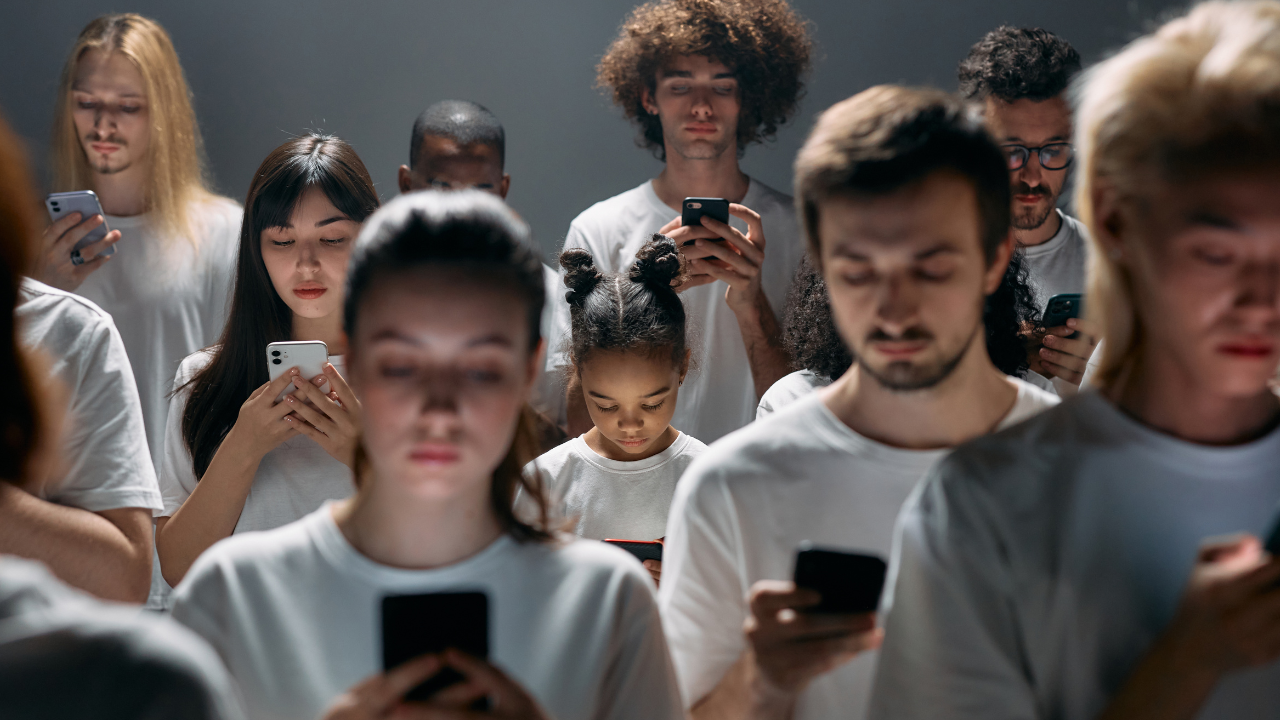

People aren't as hungry as they used to be. Not just for food, but for things. There's a creeping numbness to wanting itself, a flattening of appetite that sits underneath the noise of modern life like a low hum you can't quite locate.
Dopamine culture, the relentless optimisation of digital life for instant reward, is part of the diagnosis. But the problem runs deeper than algorithms.
Call it what you want: the rise of nihilism, the death of desire, the great unbothering. Whatever the label, the fallout from dopamine culture is real and it matters more than we've admitted.
How We Got Here
The causes stack on top of each other in uncomfortable ways.
Start with the obvious. Digital culture has been relentlessly optimised for dopamine delivery: short hits, fast rewards. Frictionless satisfaction. The algorithm gives you what you want before you've finished wanting it. Over time, that atrophies something. Craving requires a gap between now and next, and we've engineered that gap almost entirely out of existence.
Then there's the flattening of culture itself. Streaming libraries of infinite choice somehow produce the experience of having nothing to watch. AI-assisted content fills every surface with competent, smooth, forgettable output. The signal-to-noise ratio of genuinely surprising things that stop you and make you feel something keeps dropping. A culture that produces less surprise generates fewer things worth wanting.
And then there's the wildcard: GLP-1 drugs. The weight-loss medications that have swept across mainstream culture don't just suppress appetite for food. Emerging evidence and countless user accounts suggest they suppress wanting more broadly: craving, anticipation, the little buzz of looking forward to something. Dampen desire in one place, and something shifts elsewhere too.
Why Imagination Is the Thing That's Actually at Stake
Underneath all of this sits a deeper problem: the dulling of imagination.
Imagination is not a luxury faculty. It's the mechanism through which humans generate joy, not just in creative work but in everyday life. Imagination is what enables the pleasure of anticipation, the warmth of picturing a future that feels worth moving toward, and the capacity to see something that doesn't yet exist and feel moved by it.
Imagination generates joy by producing novelty, possibility, and meaning. When it’s crowded out by constant stimulation, softened by pharmaceutical suppression of desire, and numbed by the relentless mediocrity of frictionless content, joy follows it down.
The withering of imagination partly explains the rise of nihilism in younger generations: a world that can’t imagine better can’t imagine anything to believe in.

How Dopamine Culture Impacts Brands
Marketing has always depended on the ability to make people want something they don't yet have. Innovating new things to market has always depended on imagination: the ability to picture a future that doesn't exist and build toward it. Strategy has always depended on possibility thinking: the capacity to imagine genuinely different futures and choose between them with conviction.
The populations you're trying to reach are becoming less able to want, less able to imagine, less moved by novelty and possibility; that’s why the tools you've long used to reach them have stopped working.
That’s why campaigns that would have landed five years ago feel like they're bouncing off. Category innovations that should excite feel flat, and consumer research keeps surfacing a muted, ambivalent response where engagement used to be. It’s tempting to assume the creative wasn't bold enough, or the targeting was off. But brands won’t reach imagination-starved consumers by shouting louder.
In an age of infinite supply, genuine desire is the scarce resource. In a low-desire economy, wherein consumer demand has a low ceiling, brands must create genuine spaces that slow things down and invite consumers to participate. Offer something worth wanting rather than something engineered to trigger a response.
Why is this a worthy pursuit? Because consumers are showing clear signals that they crave desire.
Four Signals That Desire Isn't Dead
Consumers aren't passively accepting dopamine culture. Increasingly, they're experimenting with ways to reclaim attention, anticipation and meaning in their lives. From boredom-maxxing and analogue hobbies to slow media and underconsumption movements, we're seeing early signs of a cultural correction.
These behaviours matter because they reveal what people are missing. In a low-desire economy, brands should pay attention.
Create space
The rise of boredom-maxxing and digital detoxes suggests consumers are actively seeking relief from constant stimulation. Imagination needs empty space to operate. Brands don't always need to fill every moment; sometimes the opportunity lies in creating room for anticipation to build.
Reintroduce friction
Film photography, knitting, scratch cooking, vinyl. Consumers are rediscovering the value of effort. In a world obsessed with convenience, friction can create meaning. The things we work for often become the things we value most.
Protect wonder
The growth of long-form podcasts, newsletters and reading culture points to a renewed appetite for depth. Wonder requires sustained attention. Brands that create richer, more immersive experiences may have an advantage over those optimised solely for speed and volume.
Recover wanting
Underconsumption-core and de-influencing aren't signs that consumers have stopped wanting things. They're signs that consumers are becoming more selective about what deserves to be wanted. The challenge for brands is not to trigger desire, but to create something genuinely worthy of it.
Rebuild Imagination and Reclaim Something Bigger
We have more access to more things than any humans in history. We have AI that can produce on demand. We have platforms that will deliver almost anything to our door. Yet we have no sense of a future worth building.
Understanding our world has never been easier. But imagining what we do with that understanding — what we build, what we want, what we reach toward — is where the real competitive edge lives.
Recovering that edge looks less like adding more stimulus, and more like creating the conditions for desire to breathe again.