

Most organisations say they value creativity. Then they systematically design it out of every process they have.
It's not malice, it's efficiency. Businesses are built to remove uncertainty, and uncertainty is where imagination lives. So we optimise imagination away. We replace intuition with frameworks. We swap curiosity for KPIs. We build systems so airtight that there's no room left to wonder.
And then we're surprised when innovation stalls.
Here's the uncomfortable truth. Imagination isn't the soft stuff that happens before the real work begins. It’s not just brainstorms or mood boards or creative warm-up exercises. Imagination is the mechanism behind how we think, make decisions, and believe. It's perception, memory, and possibility working together. And when you understand how it actually works, you can use it like a strategic muscle.
At 8TH DAY, we've spent years studying imagination as a discipline. Not creativity for its own sake, but imagination as a way of seeing, thinking, and building. We call it Imagination Science. And at its core is a simple framework: five distinct types of imagination that, when used deliberately, unlock breakthrough innovation.
The five types of imagination
-
Sensorial imagination operates at the subliminal level. It's inner sensing. The capacity to stay connected to how the world feels, not just how it's described. Sensory details drive behaviour before logic does.
-
Empathetic imagination is social. It's emotional mirroring. The ability to move beyond what people say to understand how they feel and why they act.
-
Narrative imagination is conceptual. It's pattern weaving. The capacity to give direction to ambiguity by shaping meaning others can believe in.
-
Explorative imagination is associative. It's creative wandering. The ability to open the field of view by connecting unlikely dots and following curiosity.
-
Strategic imagination is intentional. It's mental time travel. The capacity to turn insight into direction by rehearsing futures and choosing what to make real.
These aren't personality types or team roles. They're cognitive modes. And innovation isn't a straight line from insight to outcome. It's constant switching between sensing, empathising, storytelling, exploring, and shaping.
What this looks like in practice
A few years ago, we worked with SC Johnson on a challenge: create breakthrough innovation in daily surface cleaning products for the Chinese market.
The brief could have gone the predictable route. Better formulas and stronger claims. Incremental improvements on what already existed. Instead, we used all five types of imagination to move from incremental thinking to something that felt genuinely new.
It started with sensorial imagination. We observed people cleaning in their homes using motion activated cameras. And we noticed something strange: people kept rinsing their surfaces. Over and over. They weren't reacting to visible residue. They were sensing something invisible. An imperceptible chemical film that no survey would have captured, because consumers couldn't articulate it. They just felt it.
That one observation unlocked everything.
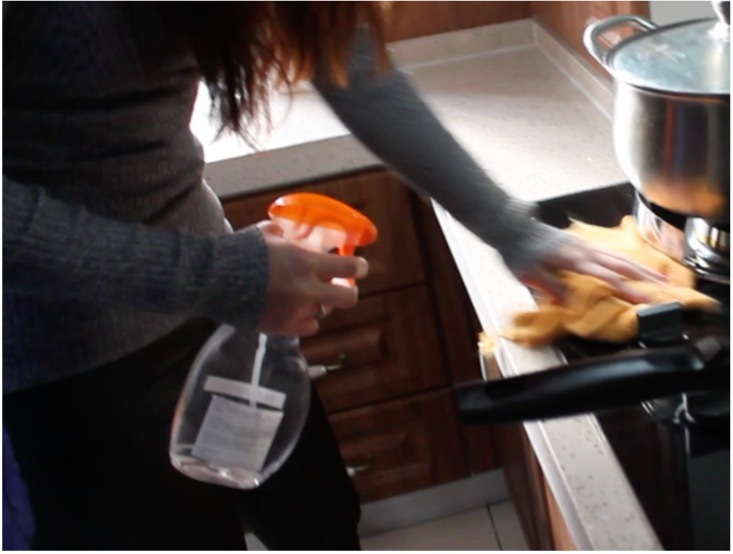
We moved into empathetic imagination. What was the emotional logic behind this behaviour? We realised it was about trust. In this market, ‘natural’ meant trustworthy. ‘Chemical’ meant untrustworthy. The product wasn't failing on performance. It was failing on feeling.
Then came narrative imagination. We needed to reframe the story. The category had been built around ‘chemical performance’. But what if the real opportunity was to make the product feel ‘safer’? We shifted the goal entirely. By looking at analogous categories, we identified language that felt suitable for kitchen surfaces: words like ‘daily’ and ‘mist’.
Explorative imagination opened up new possibilities. We tested a range of products in real homes, packaged in different quantities and equipped with different trigger types. We discovered that smaller bottles were kept out on display, which kept the product in frequent use. The format mattered as much as the formula. Visibility changed behaviour.
Finally, strategic imagination brought it all together. We refined until the product didn't merely make sense on paper. It intuitively made sense to people because they could imagine it.
The result was Mr. Muscle Daily Surface Mist. A product that felt inevitable because it had been felt, understood, storied, explored, and rehearsed before it was made. From the product name, to the spray trigger, to the formula sensorials, to the packaging claims and communication.
Why this matters now
Organisations are designed to remove uncertainty. In doing so, they remove imagination with it… along with opportunity.
The richest insights, the most engaging innovation, and the strongest commercial outcomes don't come from removing imagination. They come from restoring it to the centre of business.
Not as a nice-to-have. Not as a creative indulgence. But as a disciplined way of seeing, thinking, and building.
The five types of imagination aren't magic. They're method. And if your organisation has spent years optimising them away, we can help you get them back.
Join us for a webinar to explore the 5 Types of Imagination on the 22nd of January at 11am EST / 4pm GMT. Event registration coming soon.